

How to Choose the Best Espresso Grinders
A grinder equipped with a hopper lets you grind and dispensing an air filter in one step. This is an excellent option for those who are new to the field. However, we have found that measuring the dose prior to grinding improves consistency.
Select a grinder that has flat burrs and can produce an ultrafine grind. These grinders might be a bit more expensive but they provide extraordinary results in the cup.
Simple to use
The espresso grinder plays a crucial role in the production of quality espresso. Many espresso lovers make the mistake of buying a cheap espresso grinder to save money on a high-end coffee maker. But serious espresso enthusiasts know that the quality and consistency of the grind is what make good espresso. Look for a grinder with precise grind adjustment, the capability to consistently dispense and is constructed from high-end materials.
A burr grinder is best for espresso because of its ability to produce an even, fine grind. In contrast, blade grinders cut beans into a more coarse consistency that can result in inconsistent flavors and texture in the cup. Additionally, the blades produce heat when they chop the coffee, which can alter or change the flavor of the bean.
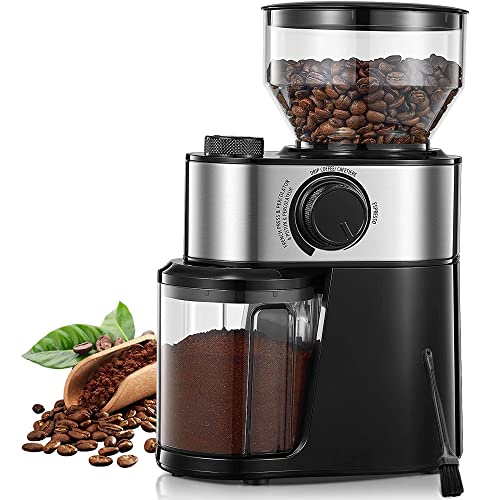
In our tests, we discovered that the top espresso grinders were easy to use and offered precise control over the size of the grounds. It is recommended to choose grinders with an easy cleaning process, a small amount retained of coffee ground (to prevent the coffee from clumping) and the ability to grind finely and evenly without overheating burrs.
Grind-by-weight grinders are also popular with espresso lovers because they allow you to set the desired weight in grams and then pour exactly that amount into your portafilter. However, they might not retain enough coffee to work in single-dose tests. The Baratza Sette 270 is the only grinder we've tested to give an equally consistent shot using this method.
Although these grinders are inexpensive and widely available but they can be difficult to use for home espresso makers due to their small size. They can cause the hopper to fill up quickly. They're also often prone to overheating and could lose their fineness over time. The MiiCoffee DF64 II is a great alternative to an ordinary knife grinder. It has flat burrs, and is a reasonable price for a top-quality grinder made specifically for espresso. If you're a serious coffee lover you can also buy the more sophisticated SSP burrs for this model to achieve an even finer grind. The MiiCoffee DF64 II is also quieter than its competitors and is the perfect choice for those who want to keep the noise level low.
Grind Size Adjustment
In the making of espresso A fine grind size is crucial to achieving the perfect extraction. It's a delicate balance between several factors, including coffee, temperature and pressure. This is why it requires precise control. This is the reason it's essential to have a grinder that's capable of producing a smooth grind, and be able to adjust the grind easily.
Grind size adjustment options are available on all espresso grinders, both home and commercial. These features are ideal for adjusting the grind size to match the size of each batch of coffee beans. They can also help you maintain the same grind over time. Some grinders have a harder time maintaining the fineness of their grind than others, and some do not have the ability to alter their grind settings at all.
If you are looking for an espresso machine that has an even grind, select one that has flat burrs rather than conical ones. These are less prone to losing their calibration over time as is often caused by heat and motor vibrations as well regular wear and tear.
To alter the size of the grind in an espresso grinder you'll need access to its adjustment ring. The ring is typically located on the top or side of your grinder, or, in some models, integrated into the hopper. To increase the grind size, simply turn the ring clockwise. Turn it counter-clockwise to decrease the grind size.
After you have found the perfect grind, make sure to remove any remaining coffee from the adjustment system. This will avoid clogging and let you adjust the grind size precisely.
This is particularly relevant for grinders that have adjustable stepped styles that are typically used on Gaggia and Saeco grinders. If the adjustment ring is full of coffee that is not fully ground and the grinder is unable to handle it, it will require more force to rotate the ring back to a new setting, which could lead to inaccurate results or even damage the grinding mechanism. You should also keep in mind that the size of the grind could need to change from one batch to the next one, based on the method in which the beans are roasted and prepared.
Control of Flow
Flow control is the capacity of the grinder to adjust enough to ensure espresso shots flow through quickly and smoothly. Even the smallest adjustments could have an impact on your coffee's quality because so much pressure is being applied to the puck. This is why it's important to choose the right grinder to produce a finely-grounded consistency.
There are two major types of espresso grinders: ones that employ a stepped adjustment style and those with an adjustable style that is stepless. Grinders that have a step-adjustment feature have a lever, or hopper-shaped knob, which is moved in a series of steps. Each time you click the knob, it will indicate a finer or coarser grind setting. This kind of grinder is favored by many novices and home baristas since it is easy to learn and use.
The most discerning users prefer grinders that have a stepless adjustment because they are simpler and more precise to use. By putting water in the portafilter lets you test the flow control of the grinder. The best grinders are able not only to create a smooth, fine-ground consistency, but also to deliver a constant flow of water through the entire shot.
When choosing an espresso grinder you must also think about whether you're looking for one that doses or does not dose. Dosing models are made up of containers with sections in which the ground coffee is poured when you press the button. Some models can accommodate 6 to 7 grams of ground coffee, while others can be adjusted to dispense more or less than that amount. Non-dosing grinders, on the other hand, dispense the grounds directly into a portafilter or other receptacle.
Some grinders, such as the Baratza Sette 270, have an v-shaped fork that you can put your portafilter in order to collect the ground. This is an excellent feature that will save your time and makes cleaning easy. However, it's important to remember that no grinder can distribute the coffee evenly into the basket so you'll still need to rotate or flip the portafilter during dosing.
Safety
Like all commercial machine, espresso grinders require a higher level of certification than models for consumer use. You should choose an espresso grinder that is either an ETL mark or NSF marking. Both marks indicate that the product has been examined by the appropriate authorities for its safety in commercial settings. Some grinders have an additional label from UL (Underwriters Laboratories), but this isn't as common and is less important.
Aside from security, you need a grinder that is simple to clean and maintain. Find a grounds chamber that makes it simple to transfer the coffee grounds to your machine for brewing. This is a feature that is common of most manual espresso grinders. We were impressed by the grounds chamber with a small divot to allow the user to place the basket's lip inside the chamber and catch the ground coffee without spilling. Other grinders we tested, such as the Baratza Sette 270 and Rancilio Stile, came with built-in V-shaped forks that could serve the same purpose, however they were less user-friendly and didn't fit the majority of our portafilters.
The shape and the material of the burrs are also crucial. You can choose between stainless steel or ceramic both of which are sought-after in the coffee world for their consistent and balanced results. You can choose between conical or flat burrs. The former tends to produce less heat fluctuations, however it's all personal preference.
Once you've found the perfect grinder, make sure to ensure it's running smoothly by performing several maintenance tasks. After every use, clean the burrs with a lint free cloth or paper towel. This will get rid of any coffee residue or coffee particles that have been left behind by the grinding process. Coffeee is also a good idea to perform a thorough clean from time to time. This is done by disassembling the blender and soaking all the removable parts in a cleaning solution, or water and vinegar. Rinse them thoroughly and dry them completely before making them ready for reassembling.
You can also use an organic lubricant that adds a thin layer of oil to the grinding chamber and the burrs. This will help prevent corrosion, rust and help keep the burrs properly aligned.